
AISI 4130 steel: composition, properties and equivalents
AISI 4130 is a medium-carbon chromium-molybdenum steel that can be heat treated to high strength and still be welded. Here is what is in it, what it does in each condition, and what it is called elsewhere.
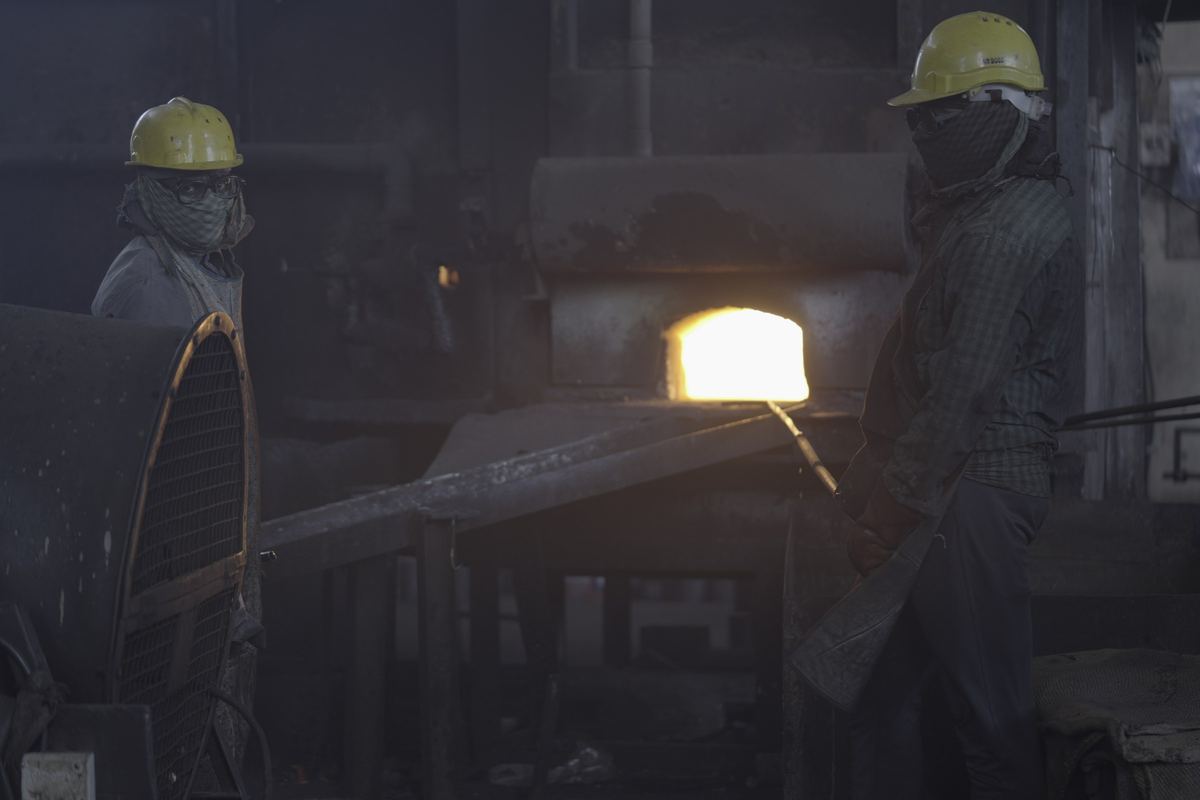
AISI 4130 (UNS G41300) is a low-alloy steel with about 0.30% carbon, 1% chromium and 0.2% molybdenum. Chromium and molybdenum let it harden through moderate sections when quenched, so it can be tempered to strengths from about 75 ksi to well over 110 ksi yield, while its moderate carbon keeps it weldable with preheat. That combination is why it is a standard material for high-pressure oilfield pipe, fittings and flowline iron.
Chemical composition
| Element | AISI / SAE 4130 | ASTM A519 Grade 4130 |
|---|---|---|
| Carbon (C) | 0.28 to 0.33 | 0.28 to 0.33 |
| Manganese (Mn) | 0.40 to 0.60 | 0.40 to 0.60 |
| Phosphorus (P), max | 0.035 | 0.040 |
| Sulfur (S), max | 0.040 | 0.040 |
| Silicon (Si) | 0.15 to 0.35 | 0.15 to 0.35 |
| Chromium (Cr) | 0.80 to 1.10 | 0.80 to 1.10 |
| Molybdenum (Mo) | 0.15 to 0.25 | 0.15 to 0.25 |
Bar and forging limits follow ASTM A29 (SAE J404); tubing limits follow ASTM A519. Oilfield specifications often tighten P and S and cap nickel below 1% for sour service.
What each element does
- Carbon sets how hard the steel can get when quenched. At 0.28 to 0.33% it is enough for high strength and low enough to weld with preheat.
- Chromium raises hardenability, so thicker sections harden through, and adds strength.
- Molybdenum raises hardenability further, helps the steel resist softening when tempered, and reduces temper embrittlement.
- Manganese adds hardenability and ties up sulfur.
Equivalent grades
| System | Grade | How close |
|---|---|---|
| UNS | G41300 | Same steel |
| EN 10083-3 | 25CrMo4 (1.7218) | Lower carbon (0.22 to 0.29%), higher manganese |
| JIS G4053 | SCM430 | Same carbon range, higher manganese and chromium |
Equivalents are near, not identical. Check chemistry and required properties before substituting one for another.
Properties by heat treatment
4130 has no single strength: the heat treatment decides it. These are the conditions most often seen on oilfield orders. Normalized values are typical; the others are minimums from the specifications and datasheets named.
| Condition | Yield | Tensile | Elongation | Hardness |
|---|---|---|---|---|
| Normalized (typical) | 64 ksi (440 MPa) | 97 ksi (670 MPa) | 26% | About 200 HB |
| Quenched and tempered, API 6A 75K | 75 ksi (517 MPa) min | 95 ksi (655 MPa) min | 17% min | To order |
| Quenched and tempered, 22 HRC max | 80 ksi (551 MPa) min | 100 ksi (689 MPa) min | 20% | 22 HRC max |
| Quenched and tempered, high strength | 110 ksi (758 MPa) min | 130 ksi (896 MPa) min | 13% | 30 to 36 HRC |
Normalized: MakeItFrom. 75K: API 6A material designation. 22 HRC and 30 to 36 HRC: Howco datasheet for 4130 tube. Your order should state the level you need.
How to call these levels out on an order is covered in 4130 75K, 80K and L80; how the furnace gets there is in 4130 heat treatment.
Physical properties
| Property | Value |
|---|---|
| Density | 0.284 lb/in³ (7.85 g/cm³) |
| Elastic modulus | About 27,600 to 29,700 ksi (190 to 205 GPa) |
| Thermal expansion | About 7.2 µin/in·°F (13 µm/m·K) |
| Thermal conductivity | About 25 BTU/h·ft·°F (43 W/m·K) |
| Melting onset | About 2,590 °F (1,420 °C) |
Weldability
4130 is weldable, but it hardens in the heat-affected zone, so welds are made to a qualified procedure with preheat and controlled interpass temperature, usually followed by post-weld heat treatment on pressure parts. For sour service, NACE MR0175 / ISO 15156-2 caps the weld, heat-affected zone and base metal at 250 HV10, and calls for post-weld heat treatment at no less than 1,150 °F (621 °C) when the as-welded hardness is higher. See 4130 for sour service.
Where 4130 is used in oil and gas
- Seamless pipe for choke and kill, mud, cement and well test lines, see 4130 seamless pipe
- Heavy-wall butt-weld fittings and long sweep elbows for those lines, see 4130 fittings
- Flowline iron for frac and flowback: integral fittings, pup joints and swivels, see integral fittings
- Pressure-containing parts of wellhead and pressure control equipment
4140 has more carbon and manganese, hardens deeper and reaches higher strength, but is harder to weld. The comparison is in 4130 vs 4140.
Frequently asked questions
Is 4130 the same as chromoly?
"Chromoly" or "chrome-moly" is a loose name for steels alloyed with chromium and molybdenum. 4130 is the best known of them, but the name also covers 4140 and the 1¼Cr and 2¼Cr pressure-vessel grades, so name the grade on an order, not the nickname.
Is 4130 stainless steel?
No. With about 1% chromium it is a low-alloy steel. Stainless steels need at least about 10.5% chromium. 4130 rusts like carbon steel and is painted or coated for storage and service.
What is the European equivalent of AISI 4130?
The nearest EN grade is 25CrMo4 (1.7218), with slightly lower carbon and higher manganese. JIS SCM430 is closer in carbon. Neither is identical, so check the chemistry and properties against your specification before substituting.
What hardness is 4130?
It depends on the heat treatment: about 200 HB normalized, 22 HRC or less when quenched and tempered for sour service, and 30 to 36 HRC for high-strength parts. The hardness ordered should always be written on the purchase order.
Sources
- ASTM A519, seamless carbon and alloy steel mechanical tubing (Grade 4130 chemistry)
- ASTM A29 / SAE J404, chemical compositions of SAE alloy steels
- API Specification 6A, material designations
- NACE MR0175 / ISO 15156-2:2020, Annex A
- MakeItFrom, normalized SAE-AISI 4130
- Howco, grade 4130, 4140 and 4145 tube datasheet