
4130 heat treatment: normalizing, quenching and tempering
Heat treatment is what turns 4130 from a soft bar into a 15,000 psi part. These are the stages, the temperatures behind them and what the certificate should show.
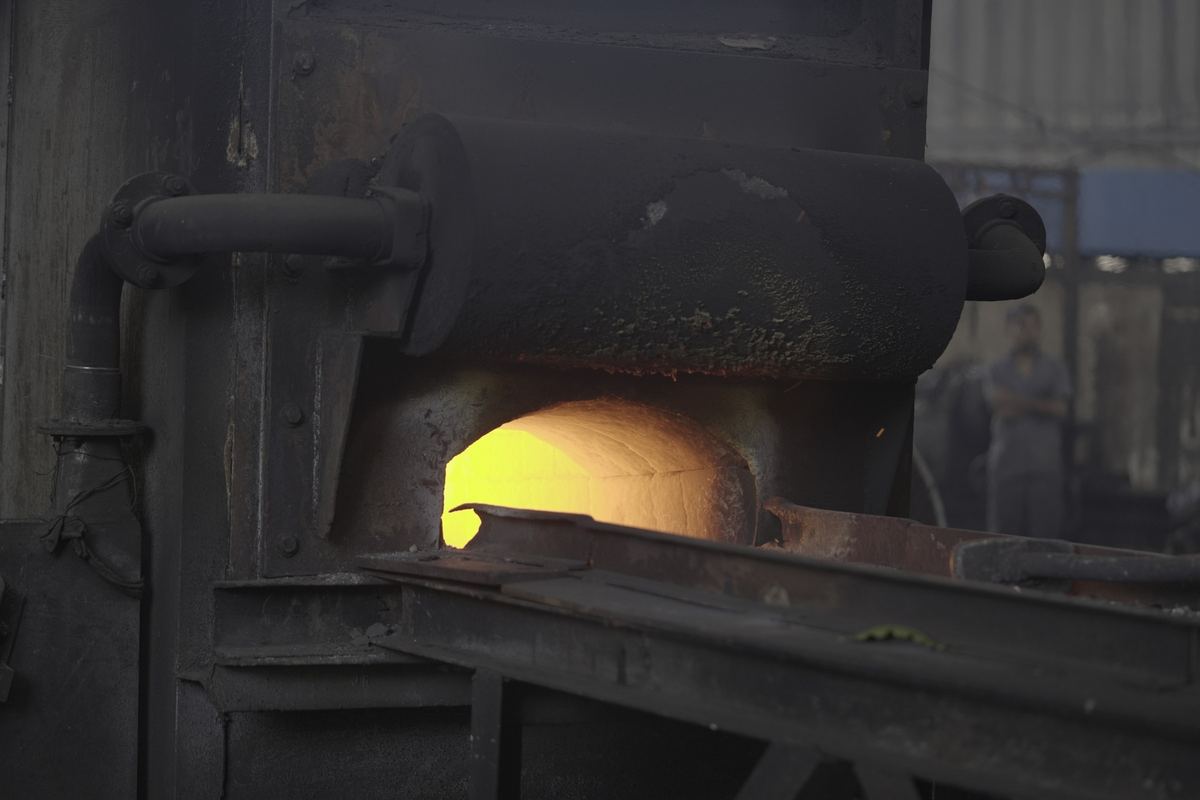
For pressure parts, 4130 is usually normalized, then hardened by heating to about 1,600 °F (871 °C) and quenching, then tempered to the strength and hardness the order asks for. Lower tempering temperatures give higher strength; higher tempering temperatures give lower hardness and more toughness, which is how sour-service parts reach 22 HRC or less. Welds on pressure parts are then post-weld heat treated.
Temperatures at a glance
| Stage | Temperature | Notes |
|---|---|---|
| Forging | Start at up to 2,200 °F (1,204 °C), finish above 1,750 °F (954 °C) | Shapes the part; followed by normalizing |
| Annealing | 1,550 °F (843 °C), furnace cool slowly to 900 °F (482 °C), then air cool | Softest condition, for machining or forming |
| Normalizing | 1,650 to 1,700 °F (899 to 927 °C), air cool | Refines and evens out the grain; a delivery condition or the step before hardening |
| Hardening | Austenitize at about 1,600 °F (871 °C), then quench in oil or water | Through-hardens moderate sections |
| Tempering | 750 to 1,050 °F (399 to 566 °C) for high strength; higher for lower hardness | Sets the final strength, hardness and toughness |
| Post-weld heat treatment, sour service | At least 1,150 °F (621 °C) | NACE MR0175 / ISO 15156-2 minimum for low-alloy steel welds |
Forging to tempering: typical values from published AISI 4130 data (Suppliers Online). PWHT: ISO 15156-2:2020. A qualified procedure sets the exact values for each part.
Normalizing
Normalizing heats the steel above its transformation range and lets it cool in air. It refines the grain coarsened by forging or hot forming and gives a uniform structure. Normalized 4130 is typically around 64 ksi yield and 200 HB. It is a delivery condition in its own right and the usual first step before hardening, so the quench starts from an even structure.
Quenching
To harden, the part is heated to about 1,600 °F, held long enough for the whole section to transform, and quenched. The quench turns the structure to martensite, which is hard and brittle until tempered. How deep the hardening goes depends on the wall: 4130 hardens moderate sections through, but at the center of very heavy walls it cools more slowly and reaches lower strength. That is why pressure-equipment specifications fix where the test piece is taken; API 6A, for example, relates the test location to the part's equivalent round section through a qualification test coupon.
Tempering sets strength and hardness
Tempering reheats the quenched part to below its transformation range. The higher the tempering temperature, the more strength and hardness come off and the more toughness goes on. The same 4130 part can therefore be tempered to any of these levels:
| Target | Tempering | Result |
|---|---|---|
| High strength | Lower temperatures | For example 110 ksi min yield at 30 to 36 HRC; not for sour service |
| 15,000 psi lines | Moderate temperatures | For example 85 ksi min yield, 110 ksi min tensile |
| API 6A 75K | Moderate to high | 75 ksi min yield, 95 ksi min tensile |
| Sour service | High temperatures | 22 HRC max, with the strength checked by tensile test |
The callouts behind these targets are explained in 4130 75K, 80K and L80.
Stress relief and post-weld heat treatment
Welding 4130 leaves a hard heat-affected zone and residual stress. On pressure parts, the welder's procedure normally includes preheat, controlled interpass temperature and post-weld heat treatment. For sour service, ISO 15156-2 limits the weld root, heat-affected zone and base metal to 250 HV10, and where the as-welded hardness is higher, requires post-weld heat treatment at no less than 1,150 °F (621 °C). See 4130 for sour service.
What the certificate should show
- The condition: normalized, or quenched and tempered
- Austenitizing and tempering temperatures and times, and the quench medium
- Tensile, yield, elongation and reduction of area, against the ordered minimums
- Hardness readings and where they were taken
- Charpy results at the ordered temperature, where ordered
We record heat treatment on furnace charts, so the certificate states the temperatures and times the parts actually saw, and the tensile and hardness tests in our lab confirm the result. See testing and documents.
Frequently asked questions
Can 4130 be quenched in water?
It can, and water gives a faster quench and deeper hardening, but it raises the risk of distortion and quench cracking, especially at changes of section. Oil is the usual choice for 4130 parts with varying walls. The quench medium should appear on the certificate.
Why does heavy-wall 4130 sometimes test low at mid-wall?
Hardenability. 4130 has enough chromium and molybdenum to harden moderate sections, but in very heavy walls the center cools more slowly than the surface and reaches lower strength. That is why specifications fix where the test piece comes from, and why 4140 or a modified grade is sometimes chosen for thick bodies.
Is stress relieving the same as tempering?
No. Tempering follows quenching and sets the final strength and hardness. Stress relieving is a lower-temperature treatment, below the tempering temperature, that reduces residual stress from machining, forming or welding without changing the properties much.
Sources
- Suppliers Online, AISI 4130 heat treatment data
- NACE MR0175 / ISO 15156-2:2020, A.2.1.4 and Table A.1 (weld hardness and PWHT)
- API Specification 6A, qualification test coupons