
4130 for sour service: NACE MR0175 / ISO 15156-2 limits
Hydrogen sulfide can crack hard steel under stress. NACE MR0175 / ISO 15156 sets the limits that keep 4130 out of that range. These are the limits that apply to pipe, fittings and their welds.
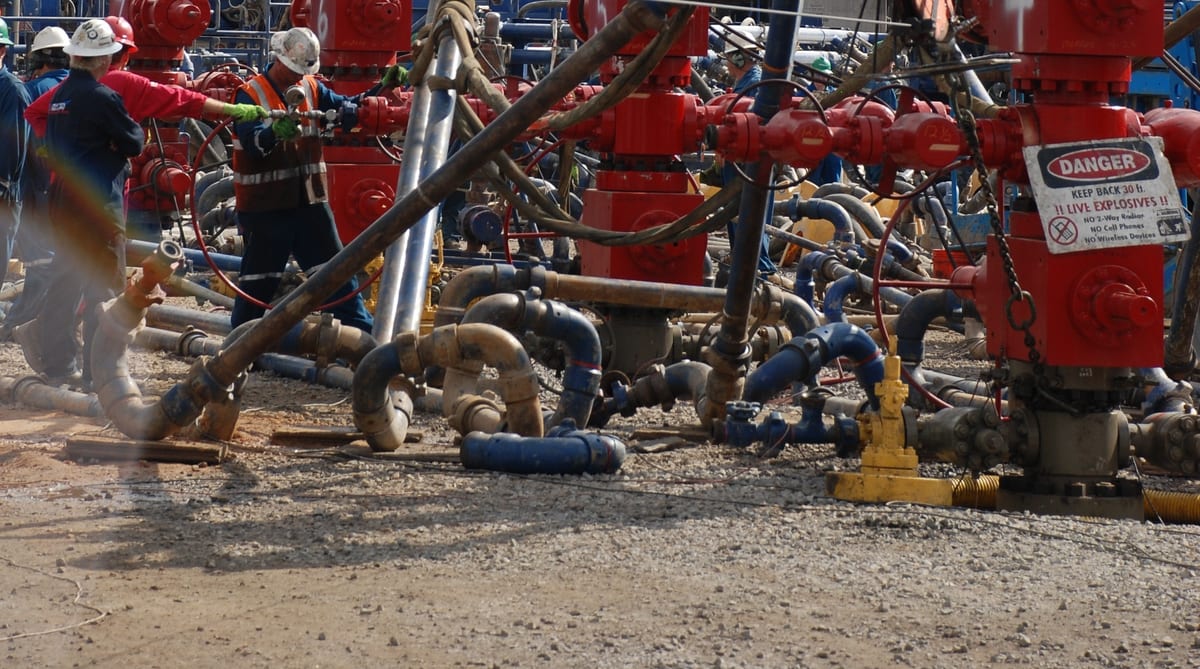
Under NACE MR0175 / ISO 15156-2, 4130 is acceptable for sour service at 22 HRC maximum, provided it contains less than 1% nickel, is not a free-machining steel, and is in an accepted heat treatment condition such as quenched and tempered or normalized. Welds must keep the root, heat-affected zone and base metal at 250 HV10 or less, and need post-weld heat treatment at no less than 1,150 °F (621 °C) when they do not meet that as welded.
How the standard is organized
NACE MR0175 / ISO 15156 has three parts. Part 1 sets general principles; Part 2 covers carbon and low-alloy steels, which is where 4130 sits, and their resistance to sulfide stress cracking; Part 3 covers corrosion-resistant and other alloys. The rules below come from Part 2, 2020 edition, Annex A.
The base rule for 4130
| Requirement | Limit |
|---|---|
| Hardness | 22 HRC maximum |
| Nickel | Less than 1% |
| Free-machining steels | Not acceptable |
| Heat treatment condition | Annealed, normalized, normalized and tempered, normalized or austenitized then quenched and tempered, or austenitized then quenched and tempered (hot rolled for carbon steels only) |
For a 4130 part this means: order it quenched and tempered or normalized, cap hardness at 22 HRC, keep nickel below 1%, and have the hardness checked and reported on the certificate.
Where higher hardness is allowed, and where it is not
Part 2 has a few product-specific clauses for chromium-molybdenum steels of the 41xx family that allow more than 22 HRC. None of them covers pipe fittings or surface flowline.
| Product | Allowed | Condition |
|---|---|---|
| Downhole casing, tubing and tubular components | Up to 26 HRC | Quenched and tempered; sulfide stress cracking qualification recommended (A.2.2.3.3) |
| Downhole tubulars, 100 to 110 ksi SMYS | Up to 30 HRC | Each test batch passes sulfide stress cracking tests (A.2.2.3.2) |
| BOP rams | Up to 26 HRC | Quenched and tempered, with controlled chemistry and test evidence above 22 HRC (A.2.3.2.2) |
| Pipe, fittings, flowline iron | 22 HRC | General rule applies |
Welds and post-weld heat treatment
A weld in 4130 hardens beside the fusion line, so the limits on welds matter as much as those on the parts.
| Location | Limit |
|---|---|
| Weld root, heat-affected zone and base metal | 250 HV10 (or HV5) maximum; 22 HRC where Rockwell is used |
| Weld cap | 275 HV maximum only by agreement with the equipment user, on parent material over 9 mm (0.35 in) thick where the cap is not exposed to the sour environment; otherwise 250 HV |
| Welds that exceed the limits as welded | Post-weld heat treatment at 1,150 °F (621 °C) minimum |
A 4130 fitting tempered to 22 HRC can still leave a weld that fails the hardness survey. The welding procedure, its preheat and its post-weld heat treatment have to be qualified with hardness testing for sour service, which is the fabricator's part of the job.
What to check on the certificate
- Nickel content below 1%, alongside the rest of the chemistry
- The heat treatment condition, with tempering temperature
- Hardness readings, their locations and the maximum, against 22 HRC
- A statement of compliance with NACE MR0175 / ISO 15156-2 and the edition
HRC, HV10 and the other hardness terms are defined in the glossary. We test hardness in our own lab and print the readings on the EN 10204 3.1 certificate. See testing and documents.
API 6A material classes
Wellhead and pressure control equipment built to API 6A uses material classes. Classes AA, BB and CC are for general service; classes DD, EE, FF and HH are for sour service and require compliance with NACE MR0175 / ISO 15156. A 4130 part going into DD, EE or FF equipment is ordered with the 22 HRC limit above.
Union-end fittings in sour service
Hammer union figures have sour gas versions with lower cold working pressures: FIG 1002 at 7,500 psi and FIG 1502 at 10,000 psi, against 10,000 and 15,000 psi in standard service, with FIG 2202 for 15,000 psi sour gas. See hammer union figure numbers and 4130 integral fittings.
Frequently asked questions
Is 4130 NACE approved?
NACE MR0175 / ISO 15156 does not approve brands or products; it sets limits that materials must meet. 4130 meets them for most equipment when it has less than 1% nickel, is in an accepted heat treatment condition such as quenched and tempered, and is 22 HRC or less, with welds within the weld hardness limits.
Can 4130 fittings be 26 HRC in sour service?
Not under the general rule. ISO 15156-2 allows chromium-molybdenum steel up to 26 HRC only for specific products, such as downhole tubulars and BOP rams, with sulfide stress cracking qualification. Fittings, pipe and flowline iron fall under the 22 HRC rule.
Does sour service change the pressure rating?
For union-end fittings, yes: the sour gas version of a hammer union figure carries a lower cold working pressure, for example 10,000 psi for FIG 1502 against 15,000 psi in standard service. For butt-weld parts, the designer rates the line with the strength the sour-service heat treatment delivers.
Sources
- NACE MR0175 / ISO 15156-2:2020, Annex A (A.2.1.2, A.2.1.4, A.2.2.3, A.2.3.2, Table A.1)
- API Specification 6A, material classes (as listed in Stream-Flo's API 6A purchasing guide, May 2020)
- TechnipFMC flowline products catalog, sour gas ratings of Weco union figures